


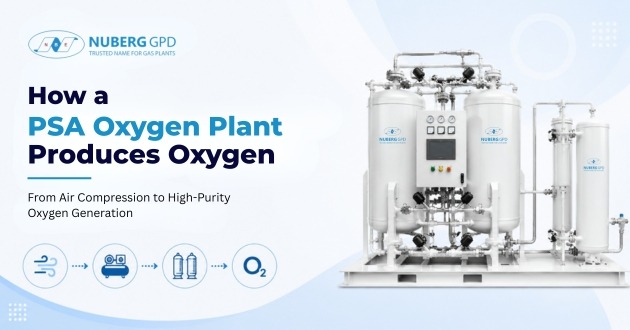
In recent years, there has been an increased reliance on the continuous and assured supply of oxygen in all areas of industrial operation and healthcare systems. Relying on conventional methods for acquiring this gas (transporting and storing high-pressure gas cylinders or accepting liquid oxygen deliveries) often exposes facilities to delays caused by supply chain disruptions, escalating transportation costs and inherent dangers related to handling compressed gases.
In order to circumvent these issues, the latest facilities are moving toward on-site oxygen generation and at the core of this change lies the Pressure Swing Adsorption (PSA) process. This technology provides a self-sufficient, safe and cost-effective way to produce high-purity oxygen directly from the surrounding air.
PSA Oxygen Plants and Their Importance
A PSA oxygen plant is an on-site engineering system designed to isolate oxygen from the atmosphere. This process, unlike chemical oxidation or extremely cold cryogenic separation, utilizes no reaction process and simply separates the component gases based on physical adsorption principles.
The atmosphere is composed of approximately 78% Nitrogen, 21% Oxygen, 0.9% Argon and trace elements. PSA systems use the physical properties of these gases as they interact under variable pressure with specific types of porous material and a changing pressure, provides a consistent stream of between 90 and 95% purity oxygen – which is more than sufficient for all industrial heavy uses and all standard medical infrastructure needs.
The Process of Oxygen Generation in a PSA Oxygen Generator
The basis of operation of the PSA oxygen generator lies in a process called selective adsorption. This takes place by using an advanced filtration material known as Zeolite Molecular Sieve (ZMS). The generation process operates on a continuous cycle that runs two processes alternating between two towers:
-
The Adsorption phase (high pressure):
Clean, compressed air is fed into the first tower which contains the Zeolite. While under increased pressure the Zeolite adsorbs nitrogen into its pores and because of the molecular interaction, the oxygen passes through without adsorbing and is collected at the top of the first tower in an oxygen receiver.
-
The Desorption phase (low pressure / regeneration):
Before the Zeolite in the first tower is full, air is switched over to the second tower. At the same time the pressure inside the first tower is reduced to ambient atmospheric pressure, causing the nitrogen to be released from the pores and vented into atmosphere and allowing the Zeolite to become available to start the process all over again.
By alternating the process between two vessels, a constant flow of pure oxygen is maintained at all times.
Major Components of a PSA Oxygen Plant
There are several major components necessary for a PSA oxygen plant to function as intended:
- Air Compressor: Draws in ambient air and compresses it to the optimal pressure for the adsorption process.
- Air Cleaning System (Dryer & Multi-Stage Filters): A crucial safety mechanism for any on-site generation plant, which cools down compressed air and eliminates moisture and dust from it. If this system fails, moisture and oil can significantly shorten the life of Zeolite sieves.
- Two PSA Adsorption Towers: These are vessels that house the Zeolite Molecular Sieve and conduct the actual separation process.
- Oxygen Buffer Tank: Acts as a surge vessel to stabilize pressure and ensure a consistent flow of oxygen.
- Automated Control Panel: Houses all electronic controls which open and close the various valves and switch between processes without user interaction.
Advantages of PSA Oxygen Generators in Industrial and Medical Use
The benefits of on-site generation cannot be stressed enough:
- Continuous Availability: Stations and facilities are fully independent of third party gas suppliers, removing any risk of deliveries not being made on time.
- Cost Reduction: Eliminating all costs associated with rental of cylinders, transport and the need for manual handling of compressed gas cylinders, can drastically reduce operational expenditures.
- Improved Workplace Safety: The storage and handling of potentially hazardous high-pressure gas cylinders are eliminated, reducing the risk of explosion or injury.
- Low Maintenance: With optimal operating conditions and filter changes as per schedule, Zeolite sieves in PSA units will perform at high efficiencies for many years-often exceeding a decade.
Applications for PSA Oxygen Plants
PSA systems have a wide array of applications for all fields of business and science. This is why it is ideal for:
- Healthcare & Medical Facilities: As a stand alone direct source of medical grade oxygen for hospital pipeline systems and intensive care units.
- Metal Processing & Fabrication: For high-temperature applications such as welding, brazing and laser cutting.
- Water & Wastewater Treatment: Supplying oxygen to aeration tanks for biological degradation of waste.
- Glass & Ceramics Manufacturing: To improve the efficiency of high-temperature melting furnaces and reducing fuel consumption.
PSA Oxygen Plant Design Considerations and Efficiency Factors
To establish the optimum performance of a PSA Oxygen Plant it is necessary to carefully control several parameters. Some of the factors which have an influence over the operating efficiency of a PSA plant include:
- Quality of Input Feed Air: Any moisture or oil contamination of the compressed air supply will quickly degrade Zeolite.
- Operating Pressure: Both pressure levels must be controlled, not too low that the Zeolite does not attract the Nitrogen sufficiently and not too high so that the overall power requirement is increased unnecessarily.
- Ambient Conditions: Factors such as the temperature of the air surrounding the unit, will necessitate additional sizing of the initial air treatment process.
Choosing Reputable Oxygen Gas Plant Manufacturers in India
When selecting an oxygen gas plant supplier in India for a PSA plant it is advisable to choose one that possesses proven design experience, extensive expertise in building high quality machines using robust components and the strictest attention to meeting all required purity standards and regulations in the country. It is essential to ensure that you are partnering with manufacturers that will analyze your specific needs, offer a bespoke engineering solution, and back their equipment up with dedicated after-sales support and maintenance throughout India.
Future Trends in PSA Oxygen Technology
Future advancements in PSA Oxygen Plant technology focus on enhancing efficiency and functionality. Integration of IoT based remote monitoring systems allows engineers to remotely observe parameters such as purity, pressure and the health of various components in real-time. This transition toward prediction rather than cure minimizes system downtime. Additionally, research into developing alternative synthetic Zeolite materials with enhanced adsorption characteristics promises further reduction in equipment size and energy consumption per cubic meter of oxygen produced.
Conclusion – Achieving Reliable Oxygen Generation through PSA Technology
Adopting a PSA Oxygen Plant is a strategic business move for businesses seeking greater independence, significant cost savings and enhanced safety on the production floor. By providing a system that exploits simple, reliable physics to isolate oxygen from ambient air, facilities can establish a secure, on-demand utility resource which supports operational demands for many years. Choosing a competent manufacturer will help in ensuring a quality installation that maximizes operational efficiency.