
PSA Technology for Nitrogen Generation: Working Principle, Benefits, and Industrial Applications
PSA Technology for Nitrogen Generation: Working Principle, Benefits, and Industrial Applications
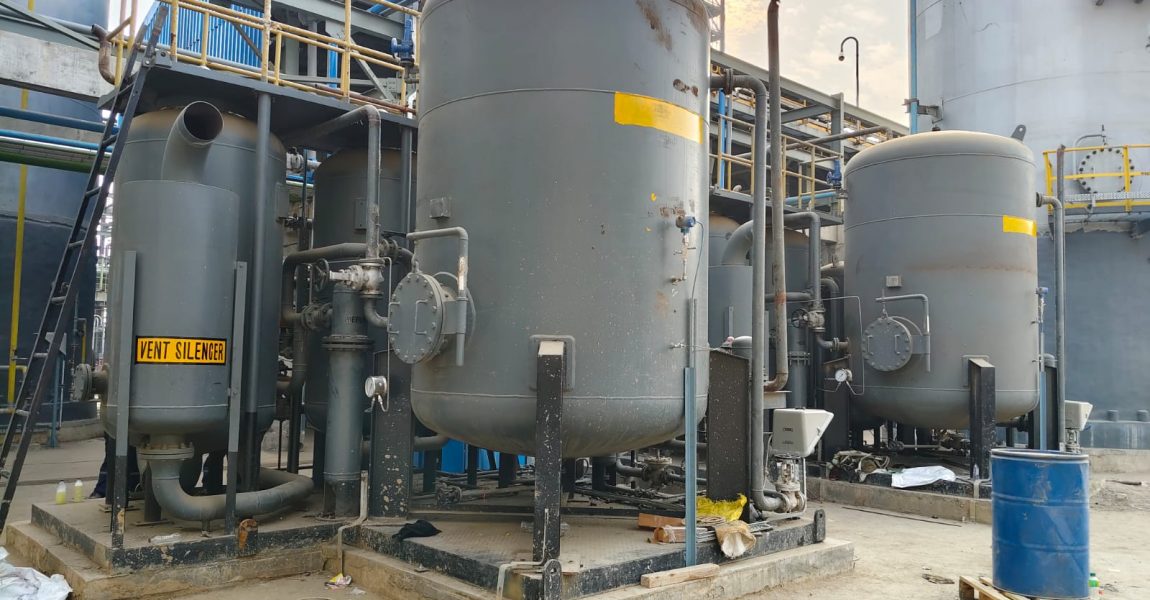
Carbon Molecular Sieve is the core functional material inside a PSA nitrogen generator. The sieve performs the actual gas separation. The compressor, valves, and controls support the process, but CMS determines nitrogen purity, recovery rate, cycle efficiency, and long-term stability.
In industrial nitrogen plants, performance metrics depend directly on CMS quality. These metrics include nitrogen purity level, purity stability over time, nitrogen recovery percentage, energy consumption per Nm³, and adsorbent service life.
What is Carbon Molecular Sieve (CMS)?
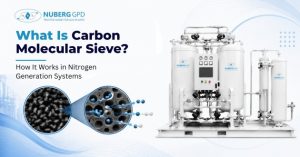
Carbon Molecular Sieve is a microporous carbon-based adsorption material used in Pressure Swing Adsorption systems to separate oxygen from nitrogen. CMS contains a controlled pore size distribution. These micropores allow oxygen molecules to diffuse into the structure faster than nitrogen molecules. This process is called selective adsorption.
Oxygen diffuses into the pores quickly due to its smaller kinetic diameter. Nitrogen diffuses more slowly and remains in the gas phase. The system collects nitrogen as the product gas.
Microporous Structure and Surface Area
CMS has high internal surface area, controlled micropore size, and uniform pore distribution. These properties allow oxygen adsorption while minimizing nitrogen adsorption.
How CMS Works Inside a PSA Nitrogen Plant
Pressure Swing Adsorption is the separation mechanism used in PSA nitrogen plants. CMS performs separation during controlled pressure cycles through a structured sequence.
Conclusion
Carbon Molecular Sieve is the core functional material inside a PSA nitrogen generator. The sieve performs the actual gas separation. The compressor, valves, and controls support the process, but CMS determines nitrogen purity, recovery rate, cycle efficiency, and long-term stability.
In industrial nitrogen plants, performance metrics depend directly on CMS quality. These metrics include nitrogen purity level, purity stability over time, nitrogen recovery percentage, energy consumption per Nm³, and adsorbent service life.
FAQ
Carbon Molecular Sieve separates oxygen from nitrogen through selective adsorption. Oxygen molecules diffuse into CMS micropores faster than nitrogen molecules. Nitrogen remains in the gas stream and exits as product gas. The PSA system regenerates CMS by reducing pressure and releasing adsorbed oxygen.
CMS typically lasts between 5 and 10 years. Lifespan depends on air quality, moisture control, pressure stability, and maintenance. Proper pretreatment and stable operating conditions extend service life.
CMS typically lasts between 5 and 10 years. Lifespan depends on air quality, moisture control, pressure stability, and maintenance. Proper pretreatment and stable operating conditions extend service life.
CMS typically lasts between 5 and 10 years. Lifespan depends on air quality, moisture control, pressure stability, and maintenance. Proper pretreatment and stable operating conditions extend service life.
PSA Technology for Nitrogen Generation: Working Principle, Benefits, and Industrial Applications
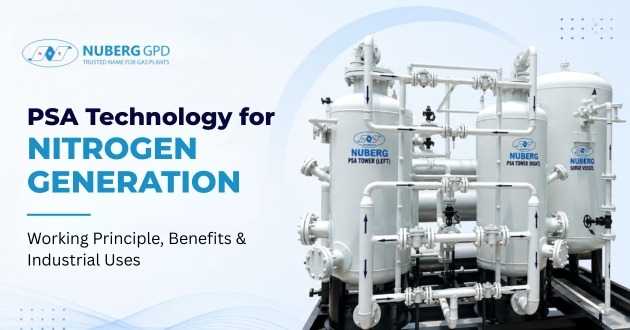
Nitrogen is one of the essential materials found in every modern factory. It acts as a barrier that prevents oxidation, spoilage, and burning—whether that’s an airtight packet of crisps in a supermarket or a volatile chemical being shipped. In previous years, businesses relied solely on bulk liquid deliveries or high-pressure gas cylinders. Today, many companies are discovering the advantages of becoming self-sufficient in their gas supply through on-site generation. PSA technology for nitrogen generation is at the core of this movement, efficiently converting air into a high-purity nitrogen stream.
Understanding PSA Technology for Nitrogen Generation
To grasp how a PSA nitrogen plant works, it’s important to define absorption and adsorption. While absorption is a process by which something penetrates into another substance, adsorption is a surface phenomenon. In a PSA setup, gas molecules “stick” to the surfaces and internal walls of certain solid materials, called adsorbents.
The primary adsorbent material used is Carbon Molecular Sieve (CMS). CMS consists of microscopic pores inside fine carbon beads. Oxygen molecules, which are smaller, adhere to the CMS more readily than nitrogen, allowing nitrogen to flow through as a high-purity gas.
How a Nitrogen Generator Works: Step-by-Step
A standard PSA nitrogen generator consists of two towers, Tower A and Tower B, both containing CMS. The cycle involves four stages:
- Pressurization and Adsorption: Compressed air is fed to Tower A. CMS removes oxygen, carbon dioxide, and water vapor. Nitrogen passes over the sieve to the storage tank.
- Equalization: High-pressure gas from Tower A partially fills Tower B to balance pressure and conserve energy.
- Regeneration and Depressurization: Tower B separates air while Tower A vents oxygen to the atmosphere.
- Counter-Current Purge: A small portion of high-purity nitrogen from Tower B flows back through Tower A, removing residual oxygen.
Key Components of a PSA Nitrogen Plant
- Air Compressor: Draws and pressurizes ambient air.
- Pre-treatment Filtration System: Removes water, oil, and impurities before the CMS.
- Twin Adsorber Vessels: Contain CMS and switch between adsorption and regeneration.
- Buffer and Storage Tanks: Ensure steady nitrogen output and compensate for flow fluctuations.
Benefits of PSA Technology
Tailored Purity Levels: Customize nitrogen purity up to 99.999% for electronics or as low as 95% for fire prevention.
Cost Reduction: On-site generation reduces cylinder delivery costs and liquid nitrogen losses by up to 90%.
Operational Safety: Eliminates heavy, high-pressure cylinders, reducing workplace hazards.
Consistency & Reliability: Advanced buffer tanks and intelligent controls maintain steady nitrogen supply even during peak demand.
Industrial Applications
- Food & Beverage Packaging: Modified Atmosphere Packaging uses nitrogen to extend shelf life.
- Chemical & Oil/Gas Processing: Inerting and blanketing of tanks to prevent oxidation and flammability risks.
- Electronics & Laser Cutting: High-purity nitrogen ensures clean cuts and prevents oxidation during soldering.
Choosing the Right PSA Nitrogen Plant Manufacturer
When selecting a manufacturer, consider:
- Technical expertise in PSA technology
- Experience with industrial nitrogen generation systems
- Customization for flow rate, purity, and operational needs
- Installation, commissioning, and after-sales support
Future Trends
PSA technology continues to evolve:
- Smaller, high-capacity CMS materials
- Smart controllers to reduce energy consumption
- Increased automation for consistent nitrogen delivery
Conclusion
Transitioning to a PSA nitrogen plant eliminates reliance on third-party cylinders and liquid nitrogen deliveries, reducing costs, improving safety, and ensuring uninterrupted production. Selecting the right system tailored to your facility will optimize operations for years to come.
FAQ
With high-quality air pre-treatment that removes moisture and oil, a top-tier CMS bed can operate efficiently for 10 to 15 years, often exceeding 40,000 hours of continuous service before needing replacement.
By integrating a properly sized downstream nitrogen buffer tank, the system easily manages sudden peak demands without causing a drop in line pressure or gas purity.
Maintenance is minimal. It generally involves routine checks, replacing air pre-treatment filter elements every few months, and scheduling annual service for the air compressor to keep the feed air clean.
Recent Posts
Categories
- PSA Oxygen
- PSA Nitrogen
- Uncategorized
- VPSA Oxygen
Product
- Hydrogen Plants
- Oxygen Plants
- Air Dryer Systems
- Nitrogen Gas Plants
- Solvent Dehydation System
PSA Technology for Nitrogen Generation: Working Principle, Benefits, and Industrial Applications
Carbon Molecular Sieve is the core functional material inside a PSA nitrogen generator. The sieve performs the actual gas separation. The compressor, valves, and controls support the process, but CMS determines nitrogen purity, recovery rate, cycle efficiency, and long-term stability.
In industrial nitrogen plants, performance metrics depend directly on CMS quality. These metrics include nitrogen purity level, purity stability over time, nitrogen recovery percentage, energy consumption per Nm³, and adsorbent service life.
What is Carbon Molecular Sieve (CMS)?
Carbon Molecular Sieve is a microporous carbon-based adsorption material used in Pressure Swing Adsorption systems to separate oxygen from nitrogen. CMS contains a controlled pore size distribution. These micropores allow oxygen molecules to diffuse into the structure faster than nitrogen molecules. This process is called selective adsorption.
Oxygen diffuses into the pores quickly due to its smaller kinetic diameter. Nitrogen diffuses more slowly and remains in the gas phase. The system collects nitrogen as the product gas.
Microporous Structure and Surface Area
CMS has high internal surface area, controlled micropore size, and uniform pore distribution. These properties allow oxygen adsorption while minimizing nitrogen adsorption.
How CMS Works Inside a PSA Nitrogen Plant
Pressure Swing Adsorption is the separation mechanism used in PSA nitrogen plants. CMS performs separation during controlled pressure cycles through a structured sequence.
Conclusion
Carbon Molecular Sieve is the core functional material inside a PSA nitrogen generator. The sieve performs the actual gas separation. The compressor, valves, and controls support the process, but CMS determines nitrogen purity, recovery rate, cycle efficiency, and long-term stability.
In industrial nitrogen plants, performance metrics depend directly on CMS quality. These metrics include nitrogen purity level, purity stability over time, nitrogen recovery percentage, energy consumption per Nm³, and adsorbent service life.
FAQ
Carbon Molecular Sieve separates oxygen from nitrogen through selective adsorption. Oxygen molecules diffuse into CMS micropores faster than nitrogen molecules. Nitrogen remains in the gas stream and exits as product gas. The PSA system regenerates CMS by reducing pressure and releasing adsorbed oxygen.
CMS typically lasts between 5 and 10 years. Lifespan depends on air quality, moisture control, pressure stability, and maintenance. Proper pretreatment and stable operating conditions extend service life.
CMS typically lasts between 5 and 10 years. Lifespan depends on air quality, moisture control, pressure stability, and maintenance. Proper pretreatment and stable operating conditions extend service life.
CMS typically lasts between 5 and 10 years. Lifespan depends on air quality, moisture control, pressure stability, and maintenance. Proper pretreatment and stable operating conditions extend service life.
Recent Posts
Categories
- PSA Oxygen
- PSA Nitrogen
- Uncategorized
- VPSA Oxygen
Product
- Hydrogen Plants
- Oxygen Plants
- Air Dryer Systems
- Nitrogen Gas Plants
- Solvent Dehydation System
Recent Posts
Understanding the Adsorption Process in Industrial Gas Separation Systems
Home / Industrial gases often need separation, purification or drying before use. The adsorption process handles this because selected molecules attach to porous solid surfaces. In industrial gas separation, adsorption separates oxygen and nitrogen, removes moisture and purifies gas streams. That’s
How Oxygen Is Produced in an Industrial Oxygen Generation Plant System
Home / Industrial facilities need a steady oxygen supply for many critical processes. An oxygen generation plant produces oxygen directly from atmospheric air, which is roughly 21% oxygen and 78% nitrogen. Industries can generate oxygen at their own site instead of
What is Carbon Molecular Sieve and How It Works in Nitrogen Systems
Home / Carbon Molecular Sieve is the core functional material inside a PSA nitrogen generator. The sieve performs the actual gas separation. The compressor, valves, and controls support the process, but CMS determines nitrogen purity, recovery rate, cycle efficiency, and long-term