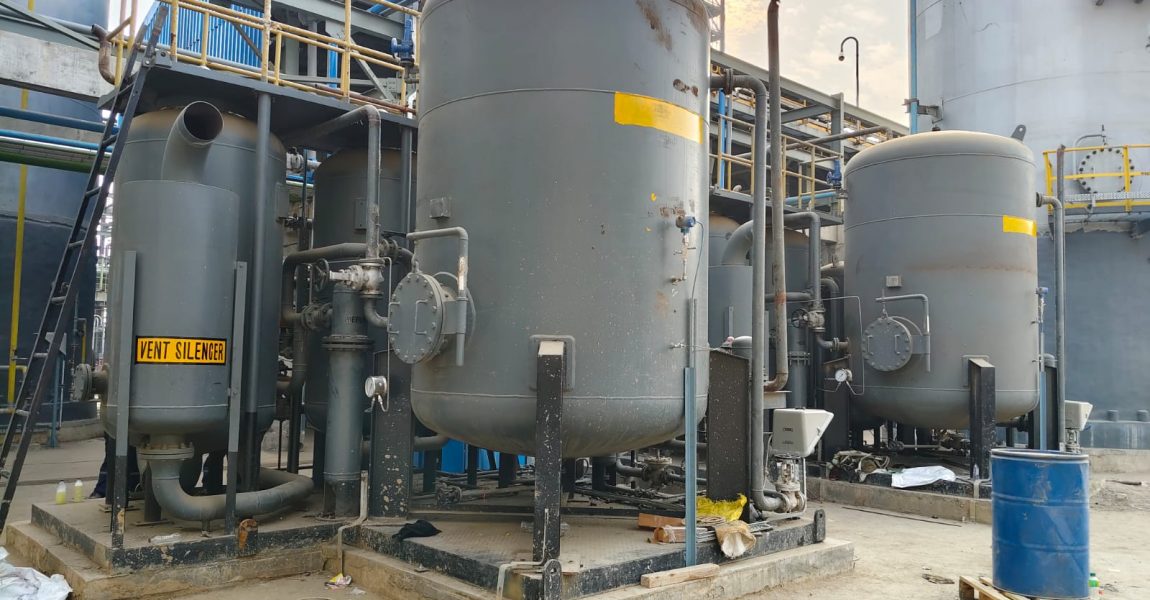
Carbon Molecular Sieve is the core functional material inside a PSA nitrogen generator. The sieve performs the actual gas separation. The compressor, valves, and controls support the process, but CMS determines nitrogen purity, recovery rate, cycle efficiency, and long-term stability.
In industrial nitrogen plants, performance metrics depend directly on CMS quality. These metrics include nitrogen purity level, purity stability over time, nitrogen recovery percentage, energy consumption per Nm³, and adsorbent service life.
Carbon Molecular Sieve is a microporous carbon-based adsorption material used in Pressure Swing Adsorption systems to separate oxygen from nitrogen. CMS contains a controlled pore size distribution. These micropores allow oxygen molecules to diffuse into the structure faster than nitrogen molecules. This process is called selective adsorption.
Oxygen diffuses into the pores quickly due to its smaller kinetic diameter. Nitrogen diffuses more slowly and remains in the gas phase. The system collects nitrogen as the product gas.
CMS has high internal surface area, controlled micropore size, and uniform pore distribution. These properties allow oxygen adsorption while minimizing nitrogen adsorption.
Pressure Swing Adsorption is the separation mechanism used in PSA nitrogen plants. CMS performs separation during controlled pressure cycles through a structured sequence.
Carbon Molecular Sieve is the core functional material inside a PSA nitrogen generator. The sieve performs the actual gas separation. The compressor, valves, and controls support the process, but CMS determines nitrogen purity, recovery rate, cycle efficiency, and long-term stability.
In industrial nitrogen plants, performance metrics depend directly on CMS quality. These metrics include nitrogen purity level, purity stability over time, nitrogen recovery percentage, energy consumption per Nm³, and adsorbent service life.
Carbon Molecular Sieve separates oxygen from nitrogen through selective adsorption. Oxygen molecules diffuse into CMS micropores faster than nitrogen molecules. Nitrogen remains in the gas stream and exits as product gas. The PSA system regenerates CMS by reducing pressure and releasing adsorbed oxygen.
CMS typically lasts between 5 and 10 years. Lifespan depends on air quality, moisture control, pressure stability, and maintenance. Proper pretreatment and stable operating conditions extend service life.
CMS typically lasts between 5 and 10 years. Lifespan depends on air quality, moisture control, pressure stability, and maintenance. Proper pretreatment and stable operating conditions extend service life.
CMS typically lasts between 5 and 10 years. Lifespan depends on air quality, moisture control, pressure stability, and maintenance. Proper pretreatment and stable operating conditions extend service life.
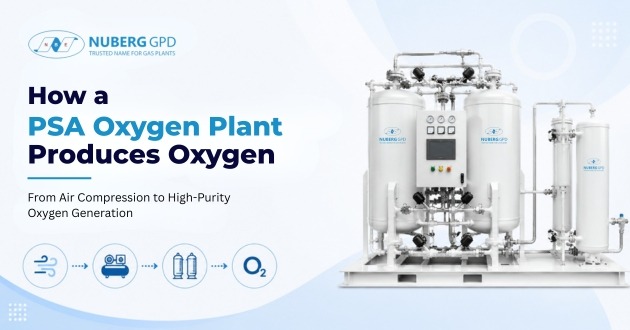
PSA Oxygen Plant Working Principle ensures a continuous and high-purity oxygen supply directly from the surrounding air. In recent years, there has been an increased reliance on the continuous and assured supply of oxygen in all areas of industrial operation and healthcare systems. Relying on conventional methods for acquiring this gas (transporting and storing high-pressure gas cylinders or accepting liquid oxygen deliveries) often exposes facilities to delays caused by supply chain disruptions, escalating transportation costs and inherent dangers related to handling compressed gases. In order to circumvent these issues, the latest facilities are moving toward on-site oxygen generation and at the core of this change lies the Pressure Swing Adsorption (PSA) process. This technology provides a self-sufficient, safe and cost-effective way to produce high-purity oxygen directly from the surrounding air.
A PSA oxygen plant is an on-site engineering system designed to isolate oxygen from the atmosphere. This process, unlike chemical oxidation or extremely cold cryogenic separation, utilizes no reaction process and simply separates the component gases based on physical adsorption principles. The atmosphere is composed of approximately 78% Nitrogen, 21% Oxygen, 0.9% Argon and trace elements. PSA systems use the physical properties of these gases as they interact under variable pressure with specific types of porous material and a changing pressure, providing a consistent stream of between 90 and 95% purity oxygen – which is more than sufficient for all industrial heavy uses and all standard medical infrastructure needs.
The basis of operation of the PSA oxygen generator lies in a process called selective adsorption. This takes place by using an advanced filtration material known as Zeolite Molecular Sieve (ZMS). The generation process operates on a continuous cycle that runs two processes alternating between two towers:
1. The Adsorption phase (high pressure): Clean, compressed air is fed into the first tower which contains the Zeolite. While under increased pressure the Zeolite adsorbs nitrogen into its pores and because of the molecular interaction, the oxygen passes through without adsorbing and is collected at the top of the first tower in an oxygen receiver.
2. The Desorption phase (low pressure / regeneration): Before the Zeolite in the first tower is full, air is switched over to the second tower. At the same time the pressure inside the first tower is reduced to ambient atmospheric pressure, causing the nitrogen to be released from the pores and vented into atmosphere and allowing the Zeolite to become available to start the process all over again. By alternating the process between two vessels, a constant flow of pure oxygen is maintained at all times.
PSA Oxygen Plant Design Considerations and Efficiency Factors
Quality of input air, operating pressure, and ambient conditions must be optimized to maintain system efficiency and longevity.
Choosing Reputable Oxygen Gas Plant Manufacturers in India
Select manufacturers with proven design experience, robust components, and strict adherence to purity standards. A trusted partner will analyze your specific needs, offer bespoke engineering solutions, and provide after-sales support.
IoT-based monitoring, predictive maintenance, and advanced Zeolite materials enhance efficiency, reduce energy consumption, and enable compact systems.
Achieving Reliable Oxygen Generation through PSA Technology
Partnering with a competent manufacturer ensures installation of an efficient PSA oxygen plant. PSA Oxygen Plant Working Principle delivers reliable, high-purity oxygen on-site, enhancing safety, reducing costs, and providing operational independence for years to come. Visit Nuberg GPD PSA Oxygen Plant to explore custom engineering solutions.
A high-quality Zeolite sieve should function properly for between ten and fifteen years if maintained in an oil-free, water-free environment.
Modern PSA Oxygen Plants can be designed to achieve purity levels above 93% and below 95%, thus fully meeting international medical gas standards.
PSA units are constructed in a relatively compact footprint. Many models are pre-assembled on skid frames, enabling relatively rapid installation. The exact physical space required varies based on the desired flow rate and production capacity, but they use far less floor space than storing bulk liquid tanks or managing massive cylinder bays.
Carbon Molecular Sieve is the core functional material inside a PSA nitrogen generator. The sieve performs the actual gas separation. The compressor, valves, and controls support the process, but CMS determines nitrogen purity, recovery rate, cycle efficiency, and long-term stability.
In industrial nitrogen plants, performance metrics depend directly on CMS quality. These metrics include nitrogen purity level, purity stability over time, nitrogen recovery percentage, energy consumption per Nm³, and adsorbent service life.
Carbon Molecular Sieve is a microporous carbon-based adsorption material used in Pressure Swing Adsorption systems to separate oxygen from nitrogen. CMS contains a controlled pore size distribution. These micropores allow oxygen molecules to diffuse into the structure faster than nitrogen molecules. This process is called selective adsorption.
Oxygen diffuses into the pores quickly due to its smaller kinetic diameter. Nitrogen diffuses more slowly and remains in the gas phase. The system collects nitrogen as the product gas.
CMS has high internal surface area, controlled micropore size, and uniform pore distribution. These properties allow oxygen adsorption while minimizing nitrogen adsorption.
Pressure Swing Adsorption is the separation mechanism used in PSA nitrogen plants. CMS performs separation during controlled pressure cycles through a structured sequence.
Carbon Molecular Sieve is the core functional material inside a PSA nitrogen generator. The sieve performs the actual gas separation. The compressor, valves, and controls support the process, but CMS determines nitrogen purity, recovery rate, cycle efficiency, and long-term stability.
In industrial nitrogen plants, performance metrics depend directly on CMS quality. These metrics include nitrogen purity level, purity stability over time, nitrogen recovery percentage, energy consumption per Nm³, and adsorbent service life.
Carbon Molecular Sieve separates oxygen from nitrogen through selective adsorption. Oxygen molecules diffuse into CMS micropores faster than nitrogen molecules. Nitrogen remains in the gas stream and exits as product gas. The PSA system regenerates CMS by reducing pressure and releasing adsorbed oxygen.
CMS typically lasts between 5 and 10 years. Lifespan depends on air quality, moisture control, pressure stability, and maintenance. Proper pretreatment and stable operating conditions extend service life.
CMS typically lasts between 5 and 10 years. Lifespan depends on air quality, moisture control, pressure stability, and maintenance. Proper pretreatment and stable operating conditions extend service life.
CMS typically lasts between 5 and 10 years. Lifespan depends on air quality, moisture control, pressure stability, and maintenance. Proper pretreatment and stable operating conditions extend service life.
Home / Pressure swing adsorption nitrogen generation: how it works and why it matters Pressure swing adsorption nitrogen generation is the standard way to make nitrogen on-site from compressed air. Most factories that use nitrogen every day now make it this
Home / What is a hydrogen cracker? Working principle, uses, and benefits A hydrogen cracker is a unit that splits ammonia into a hydrogen-rich gas, right at the factory that needs it. Bright annealing lines and brazing furnaces use this gas
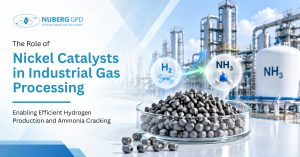
Home / Industrial chemical processes use catalysts as silent motors that initiate and accelerate desired physicochemical reactions. In particular, a nickel catalyst is considered one of the most versatile and cost-effective solutions for gas processing in large-scale production facilities. It is
Please fill in your details to download our brochure.