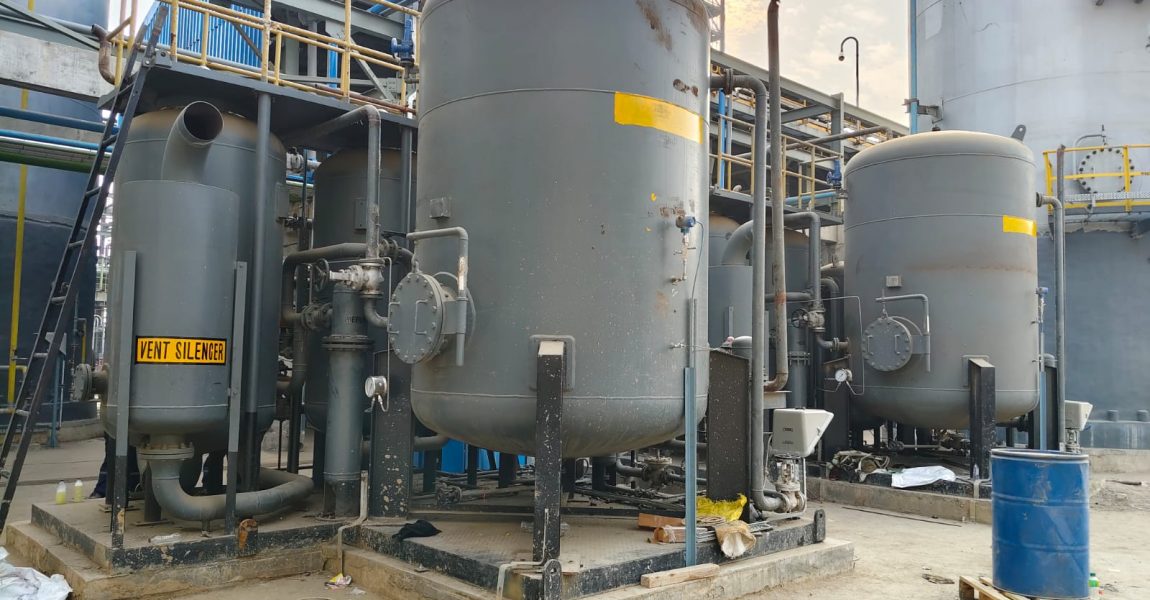
Carbon Molecular Sieve is the core functional material inside a PSA nitrogen generator. The sieve performs the actual gas separation. The compressor, valves, and controls support the process, but CMS determines nitrogen purity, recovery rate, cycle efficiency, and long-term stability.
In industrial nitrogen plants, performance metrics depend directly on CMS quality. These metrics include nitrogen purity level, purity stability over time, nitrogen recovery percentage, energy consumption per Nm³, and adsorbent service life.
Carbon Molecular Sieve is a microporous carbon-based adsorption material used in Pressure Swing Adsorption systems to separate oxygen from nitrogen. CMS contains a controlled pore size distribution. These micropores allow oxygen molecules to diffuse into the structure faster than nitrogen molecules. This process is called selective adsorption.
Oxygen diffuses into the pores quickly due to its smaller kinetic diameter. Nitrogen diffuses more slowly and remains in the gas phase. The system collects nitrogen as the product gas.
CMS has high internal surface area, controlled micropore size, and uniform pore distribution. These properties allow oxygen adsorption while minimizing nitrogen adsorption.
Pressure Swing Adsorption is the separation mechanism used in PSA nitrogen plants. CMS performs separation during controlled pressure cycles through a structured sequence.
Carbon Molecular Sieve is the core functional material inside a PSA nitrogen generator. The sieve performs the actual gas separation. The compressor, valves, and controls support the process, but CMS determines nitrogen purity, recovery rate, cycle efficiency, and long-term stability.
In industrial nitrogen plants, performance metrics depend directly on CMS quality. These metrics include nitrogen purity level, purity stability over time, nitrogen recovery percentage, energy consumption per Nm³, and adsorbent service life.
Carbon Molecular Sieve separates oxygen from nitrogen through selective adsorption. Oxygen molecules diffuse into CMS micropores faster than nitrogen molecules. Nitrogen remains in the gas stream and exits as product gas. The PSA system regenerates CMS by reducing pressure and releasing adsorbed oxygen.
CMS typically lasts between 5 and 10 years. Lifespan depends on air quality, moisture control, pressure stability, and maintenance. Proper pretreatment and stable operating conditions extend service life.
CMS typically lasts between 5 and 10 years. Lifespan depends on air quality, moisture control, pressure stability, and maintenance. Proper pretreatment and stable operating conditions extend service life.
CMS typically lasts between 5 and 10 years. Lifespan depends on air quality, moisture control, pressure stability, and maintenance. Proper pretreatment and stable operating conditions extend service life.
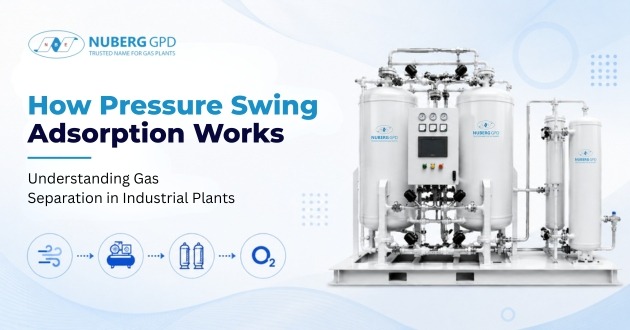
Every manufacturing unit, refinery or chemical plant is always wary of a steady and reliable gas supply chain. The traditional methods such as getting liquid gas supplies in heavy tankers or high pressure cylinders has always been challenging because it includes managing price fluctuation, supply delays and potential safety issues.
To escape such issues, many plants have decided to move on to on-site gas generation. At the forefront of this move is the Pressure Swing Adsorption (PSA)-a wonderfully robust and extremely simple technique of producing your very own on-site supply of nitrogen, oxygen and hydrogen.
Simply put, Pressure Swing Adsorption is just an efficient technique for drawing out particular gases from a gaseous blend by relying on a change in pressure. It follows the principles of physical adsorption.
Many a times this term gets confused with the term ‘absorption’. The basic difference between these two terms is the fact that ‘adsorption’ means the gases accumulate on the external and internal pores of a solid (adsorbent), whereas ‘absorption’ refers to gases soaking into the inner structure of another substance. In other words, adsorption is limited to the surface of a material and doesn’t permeate through it.
A typical industrial PSA plant generally comprises the following industrial gas solutions working in perfect coordination:
Nuberg can tailor these PSA plant components according to the specific pressure requirements of your industry, focusing on smart flow design for optimal gas yield per unit of energy.
Installing an on-site PSA technology installation guarantees immediate benefits for your business:
Each industrial application has its own specific requirements regarding pressure, volume, and purity. Nuberg engineer PSA plants tailored to individual client needs in various industries, including:
The modern PSA systems are designed with robust PLC Automation, monitoring the continuous pressure balance between the towers, as well as valve timings and the overall gas purity produced. Any abnormality automatically triggers a fail-safe shutdown, ensuring complete system security.
Regular maintenance typically involves periodic service of the air compressor and checks for wear and tear on the valves. Provided it is properly maintained, your PSA plant will give you decades of service with minimal hassle.
The Pressure Swing Adsorption technology offers a highly practical solution for industries to take control of their gas supply. With an on-site PSA plant, your business can achieve significant cost savings, enhanced production continuity and workplace safety, moving away from volatile external gas supplies and generating gases on your own terms. Choosing a trusted engineering partner like Nuberg guarantees you the assurance of a rugged, highly-efficient PSA system designed to last for decades.
This is dependent on the specific gas you wish to generate or purify. Most nitrogen generation plants operating on PSA, can produce a purity of nitrogen between 95% and 99.999% while typical oxygen PSA units will supply purity in the range of 93-95% which is perfectly adequate for industrial applications such as steel making, glass manufacturing or the medical industry.
Provided your compressors have been maintained with a consistent supply of dry, oil free air then high quality adsorbent medias, such as those utilized by Nuberg for our Nitrogen plants (Carbon Molecular Sieves) typically last a very long time, from 10-15 years, or longer.
No, the internal filters that a Nitrogen generation PSA plant uses are entirely different from those that an oxygen PSA plant uses. The Carbon Molecular Sieve used in Nitrogen plants traps the Oxygen molecules whereas the zeolite media used in oxygen generation plants traps the Nitrogen molecules. Therefore it is not possible to generate both gases on the same PSA plant.
Carbon Molecular Sieve is the core functional material inside a PSA nitrogen generator. The sieve performs the actual gas separation. The compressor, valves, and controls support the process, but CMS determines nitrogen purity, recovery rate, cycle efficiency, and long-term stability.
In industrial nitrogen plants, performance metrics depend directly on CMS quality. These metrics include nitrogen purity level, purity stability over time, nitrogen recovery percentage, energy consumption per Nm³, and adsorbent service life.
Carbon Molecular Sieve is a microporous carbon-based adsorption material used in Pressure Swing Adsorption systems to separate oxygen from nitrogen. CMS contains a controlled pore size distribution. These micropores allow oxygen molecules to diffuse into the structure faster than nitrogen molecules. This process is called selective adsorption.
Oxygen diffuses into the pores quickly due to its smaller kinetic diameter. Nitrogen diffuses more slowly and remains in the gas phase. The system collects nitrogen as the product gas.
CMS has high internal surface area, controlled micropore size, and uniform pore distribution. These properties allow oxygen adsorption while minimizing nitrogen adsorption.
Pressure Swing Adsorption is the separation mechanism used in PSA nitrogen plants. CMS performs separation during controlled pressure cycles through a structured sequence.
Carbon Molecular Sieve is the core functional material inside a PSA nitrogen generator. The sieve performs the actual gas separation. The compressor, valves, and controls support the process, but CMS determines nitrogen purity, recovery rate, cycle efficiency, and long-term stability.
In industrial nitrogen plants, performance metrics depend directly on CMS quality. These metrics include nitrogen purity level, purity stability over time, nitrogen recovery percentage, energy consumption per Nm³, and adsorbent service life.
Carbon Molecular Sieve separates oxygen from nitrogen through selective adsorption. Oxygen molecules diffuse into CMS micropores faster than nitrogen molecules. Nitrogen remains in the gas stream and exits as product gas. The PSA system regenerates CMS by reducing pressure and releasing adsorbed oxygen.
CMS typically lasts between 5 and 10 years. Lifespan depends on air quality, moisture control, pressure stability, and maintenance. Proper pretreatment and stable operating conditions extend service life.
CMS typically lasts between 5 and 10 years. Lifespan depends on air quality, moisture control, pressure stability, and maintenance. Proper pretreatment and stable operating conditions extend service life.
CMS typically lasts between 5 and 10 years. Lifespan depends on air quality, moisture control, pressure stability, and maintenance. Proper pretreatment and stable operating conditions extend service life.
Home / Industrial gases often need separation, purification or drying before use. The adsorption process handles this because selected molecules attach to porous solid surfaces. In industrial gas separation, adsorption separates oxygen and nitrogen, removes moisture and purifies gas streams. That’s
Home / Industrial facilities need a steady oxygen supply for many critical processes. An oxygen generation plant produces oxygen directly from atmospheric air, which is roughly 21% oxygen and 78% nitrogen. Industries can generate oxygen at their own site instead of
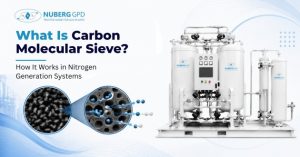
Home / Carbon Molecular Sieve is the core functional material inside a PSA nitrogen generator. The sieve performs the actual gas separation. The compressor, valves, and controls support the process, but CMS determines nitrogen purity, recovery rate, cycle efficiency, and long-term
