Carbon Molecular Sieve is the core functional material inside a PSA nitrogen generator. The sieve performs the actual gas separation. The compressor, valves, and controls support the process, but CMS determines nitrogen purity, recovery rate, cycle efficiency, and long-term stability.
In industrial nitrogen plants, performance metrics depend directly on CMS quality. These metrics include nitrogen purity level, purity stability over time, nitrogen recovery percentage, energy consumption per Nm³, and adsorbent service life.
Carbon Molecular Sieve is a microporous carbon-based adsorption material used in Pressure Swing Adsorption systems to separate oxygen from nitrogen. CMS contains a controlled pore size distribution. These micropores allow oxygen molecules to diffuse into the structure faster than nitrogen molecules. This process is called selective adsorption.
Oxygen diffuses into the pores quickly due to its smaller kinetic diameter. Nitrogen diffuses more slowly and remains in the gas phase. The system collects nitrogen as the product gas.
CMS has high internal surface area, controlled micropore size, and uniform pore distribution. These properties allow oxygen adsorption while minimizing nitrogen adsorption.
Pressure Swing Adsorption is the separation mechanism used in PSA nitrogen plants. CMS performs separation during controlled pressure cycles through a structured sequence.
Carbon Molecular Sieve is the core functional material inside a PSA nitrogen generator. The sieve performs the actual gas separation. The compressor, valves, and controls support the process, but CMS determines nitrogen purity, recovery rate, cycle efficiency, and long-term stability.
In industrial nitrogen plants, performance metrics depend directly on CMS quality. These metrics include nitrogen purity level, purity stability over time, nitrogen recovery percentage, energy consumption per Nm³, and adsorbent service life.
Carbon Molecular Sieve separates oxygen from nitrogen through selective adsorption. Oxygen molecules diffuse into CMS micropores faster than nitrogen molecules. Nitrogen remains in the gas stream and exits as product gas. The PSA system regenerates CMS by reducing pressure and releasing adsorbed oxygen.
CMS typically lasts between 5 and 10 years. Lifespan depends on air quality, moisture control, pressure stability, and maintenance. Proper pretreatment and stable operating conditions extend service life.
CMS typically lasts between 5 and 10 years. Lifespan depends on air quality, moisture control, pressure stability, and maintenance. Proper pretreatment and stable operating conditions extend service life.
CMS typically lasts between 5 and 10 years. Lifespan depends on air quality, moisture control, pressure stability, and maintenance. Proper pretreatment and stable operating conditions extend service life.
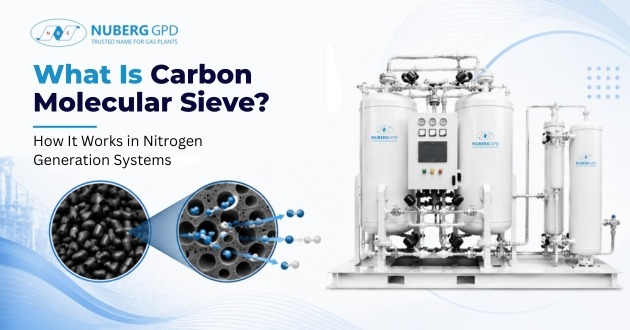
Today’s manufacturing plants simply cannot operate without a high-purity nitrogen supply. You use nitrogen to prevent the storage of hazardous chemicals from exploding, to keep your potato chips in food packaging crispy, to avoid shorts in electronics, and to maintain sterility in pharmaceuticals. Oxygen – even in small amounts – means fires, decay, and spoilage.
This indispensable gas needs a steady and affordable source, and that source is your very own industrial nitrogen generator, which utilizes an incredible material called a Carbon Molecular Sieve (CMS). Small porous carbon pellets are the backbone of virtually every industrial gas production system available today.
A Carbon Molecular Sieve appears to the untrained eye to be just tiny little black balls or granules. However, this porous material packs an enormous amount of sorting power on a microscopic level.
More specifically, CMS is a specialized form of porous carbon. Unlike regular activated carbon which is characterized by a very diverse pore structure and the ability to absorb just about any gas contaminant, a carbon molecular sieve is constructed in such a way that its microscopic pores are extremely narrow and uniform.
The secret to the remarkable sorting capability of CMS technology is its reliance on a principle known as kinetic gas separation, where different gases sort themselves based on the size and speed of the molecules:
Due to their smaller size, oxygen molecules race through the narrow pores in the CMS much more quickly and end up trapped within the carbon structure. The larger nitrogen molecules are simply unable to negotiate these narrow pathways as efficiently, so they bypass the porous structure completely and travel right on through.
To take advantage of the physical sorting of nitrogen and oxygen molecules on a commercial level, each of the two high-pressure vessels in a PSA nitrogen generator plant are filled with dense packing material made from CMS pellets. A standard PSA plant cycles through the following automated sequence:
Installing a gas purification system that relies on carbon molecular sieve instead of third-party gas supply has several advantages:
Designing a successful PSA nitrogen plant involves managing a precise balance of airflow, pressure, and the interaction between gas molecules and the sieve material. If the air moves through the column too quickly, there isn’t enough time for the oxygen to be successfully entrapped in the pores, resulting in a drop in purity.
Nuberg has decades of experience engineering PSA plants designed specifically for each customer’s flow needs. We optimize everything from the pore structure and density of the CMS bed to the physical dimensions and flow dynamics of each vessel. No matter the size or scale, we engineer custom, modular, and turnkey solutions that integrate seamlessly into your facility.
With proper air filtration and maintenance, a high-quality carbon molecular sieve bed will last for 10 to 15 years or more. The cleaning cycle is built into the operation and happens automatically when the vessel is depressurized, regenerating the sieve for the next cycle.
The primary danger to a CMS bed is contamination. If your compressed air is not properly filtered and cleaned, oil mist or moisture can enter the sieve bed and clog the microscopic pores. Once oil penetrates the CMS, the entire bed will need to be replaced as it cannot be reliably cleaned.
Insider Tip: Investing in high-quality oil separators and air dryers upstream from your nitrogen generator will protect your valuable CMS material and ensure your plant runs reliably for a decade or more!
Carbon molecular sieve technology has revolutionized the way companies produce industrial nitrogen, enabling them to break free from unreliable third-party suppliers, cut down on logistics costs, and enjoy unparalleled control over their nitrogen supply. Let Nuberg design a tailored PSA plant with optimized CMS to meet your production needs and give you peace of mind for years to come.
Unfortunately, no. Once oil and/or moisture enters the extremely fine microscopic pores of the carbon molecular sieve and begins to coat the internal surface of the material, there is no effective method of cleaning it that does not damage the structural integrity of the carbon. In such cases, the CMS material would need to be replaced. Proper air filtration of your compressed air stream is the key to preventing contamination.
Carbon molecular sieves generally perform best at moderate, consistent ambient temperatures (between approximately 20°C and 35°C). Higher ambient temperatures will reduce the carbon’s ability to adsorb oxygen effectively, leading to a decrease in your final product nitrogen purity. Ensuring efficient air aftercoolers and dryers will help keep the temperature at an optimal level.
The main difference between CMS and ZMS is what they are engineered to adsorb. CMS is primarily used in nitrogen generation systems to preferentially adsorb and remove oxygen, allowing the nitrogen to pass through. ZMS, on the other hand, is used in oxygen generation systems because it has been engineered to preferentially adsorb nitrogen, allowing the oxygen to pass through.
Carbon Molecular Sieve is the core functional material inside a PSA nitrogen generator. The sieve performs the actual gas separation. The compressor, valves, and controls support the process, but CMS determines nitrogen purity, recovery rate, cycle efficiency, and long-term stability.
In industrial nitrogen plants, performance metrics depend directly on CMS quality. These metrics include nitrogen purity level, purity stability over time, nitrogen recovery percentage, energy consumption per Nm³, and adsorbent service life.
Carbon Molecular Sieve is a microporous carbon-based adsorption material used in Pressure Swing Adsorption systems to separate oxygen from nitrogen. CMS contains a controlled pore size distribution. These micropores allow oxygen molecules to diffuse into the structure faster than nitrogen molecules. This process is called selective adsorption.
Oxygen diffuses into the pores quickly due to its smaller kinetic diameter. Nitrogen diffuses more slowly and remains in the gas phase. The system collects nitrogen as the product gas.
CMS has high internal surface area, controlled micropore size, and uniform pore distribution. These properties allow oxygen adsorption while minimizing nitrogen adsorption.
Pressure Swing Adsorption is the separation mechanism used in PSA nitrogen plants. CMS performs separation during controlled pressure cycles through a structured sequence.
Carbon Molecular Sieve is the core functional material inside a PSA nitrogen generator. The sieve performs the actual gas separation. The compressor, valves, and controls support the process, but CMS determines nitrogen purity, recovery rate, cycle efficiency, and long-term stability.
In industrial nitrogen plants, performance metrics depend directly on CMS quality. These metrics include nitrogen purity level, purity stability over time, nitrogen recovery percentage, energy consumption per Nm³, and adsorbent service life.
Carbon Molecular Sieve separates oxygen from nitrogen through selective adsorption. Oxygen molecules diffuse into CMS micropores faster than nitrogen molecules. Nitrogen remains in the gas stream and exits as product gas. The PSA system regenerates CMS by reducing pressure and releasing adsorbed oxygen.
CMS typically lasts between 5 and 10 years. Lifespan depends on air quality, moisture control, pressure stability, and maintenance. Proper pretreatment and stable operating conditions extend service life.
CMS typically lasts between 5 and 10 years. Lifespan depends on air quality, moisture control, pressure stability, and maintenance. Proper pretreatment and stable operating conditions extend service life.
CMS typically lasts between 5 and 10 years. Lifespan depends on air quality, moisture control, pressure stability, and maintenance. Proper pretreatment and stable operating conditions extend service life.
Home / Industrial gases often need separation, purification or drying before use. The adsorption process handles this because selected molecules attach to porous solid surfaces. In industrial gas separation, adsorption separates oxygen and nitrogen, removes moisture and purifies gas streams. That’s
Home / Industrial facilities need a steady oxygen supply for many critical processes. An oxygen generation plant produces oxygen directly from atmospheric air, which is roughly 21% oxygen and 78% nitrogen. Industries can generate oxygen at their own site instead of
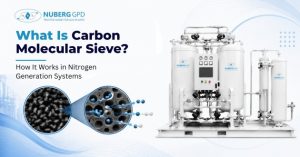
Home / Carbon Molecular Sieve is the core functional material inside a PSA nitrogen generator. The sieve performs the actual gas separation. The compressor, valves, and controls support the process, but CMS determines nitrogen purity, recovery rate, cycle efficiency, and long-term
